
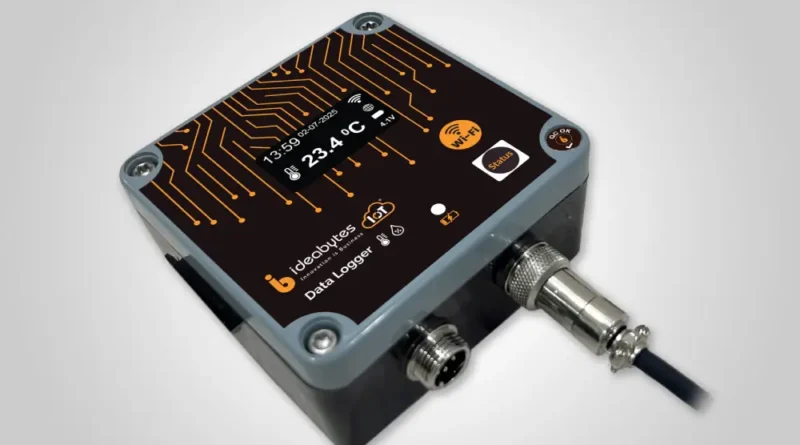
What Is a Temperature Data Logger? Complete Beginner’s Guide
Temperature plays an important role in many industries. Medicines, vaccines, laboratory samples, food products, chemicals, and other temperature-sensitive materials may need to be stored or transported within a specific temperature range.
But checking a thermometer once or twice a day does not tell you what happened between those checks. This is where a temperature data logger becomes useful.
A temperature data logger automatically measures and records temperature at regular intervals, creating a history of temperature conditions that can later be reviewed and analyzed.
What Is a Temperature Data Logger?
A temperature data logger is a small electronic device that measures, records, and stores temperature readings over a period of time.
Unlike a basic thermometer that generally shows the temperature at a particular moment, a data logger can continuously record readings according to a programmed interval.
For example, a logger may record:
- Temperature every 1 minute
- Temperature every 5 minutes
- Temperature every 15 minutes
- Temperature every 30 minutes
The exact recording interval depends on the device and application.
The recorded information can then be downloaded, viewed as graphs or reports, and used to identify temperature changes or temperature excursions.
How Does a Temperature Data Logger Work?
A temperature data logger generally works through four basic steps:
1. Temperature Sensor Measures the Environment
The sensor detects the temperature of the surrounding environment or the material being monitored.
Different models may use built-in sensors or external probes depending on the application.
2. Data Is Recorded at Set Intervals
The logger takes measurements at a predefined interval and records each reading with its corresponding time.
3. Data Is Stored
The readings are stored in the device’s internal memory. Depending on the model, data may also be transmitted to another device or cloud platform.
4. Data Is Reviewed
Users can retrieve the recorded information and analyze it through software, a computer, mobile application, or cloud dashboard.
Wireless models can provide remote access and alerts when temperature moves outside a predefined range.
Temperature Data Logger vs Thermometer
One of the easiest ways to understand a data logger is to compare it with a thermometer.
| Thermometer | Temperature Data Logger |
|---|---|
| Shows current temperature | Records temperature over time |
| Usually requires manual checking | Automatically records readings |
| Limited historical information | Stores temperature history |
| May not provide alerts | Some models provide alerts |
| Suitable for quick checks | Suitable for continuous monitoring |
For example, if a refrigerator is checked at 9 AM and shows 5°C, you know the temperature at 9 AM. But you may not know whether it reached 10°C during the night.
A data logger can provide that historical information.
Where Are Temperature Data Loggers Used?
Temperature data loggers are used wherever temperature needs to be monitored and documented.
Healthcare and Hospitals
Hospitals may use temperature monitoring for:
- Medicine storage
- Vaccine refrigerators
- Blood banks
- Laboratory refrigerators
- Freezers
- Medical samples
Continuous monitoring can help identify temperature problems before sensitive materials are affected.
Pharmaceutical Industry
Temperature control is particularly important for pharmaceutical storage and transportation.
Data loggers can help organizations maintain records of temperature conditions during storage and transportation.
Laboratories
Laboratories often use temperature data loggers for refrigerators, freezers, incubators, storage areas, and other temperature-sensitive applications.
Food and Cold Chain
Food products can be affected by unsuitable temperatures during storage and transportation. Data loggers can help businesses track conditions throughout the cold chain.
Warehouses and Storage Facilities
Temperature monitoring can also be used in warehouses where products need to remain within a specific environmental range.
Types of Temperature Data Loggers
There are different types of temperature data loggers available depending on how data needs to be collected.
USB Temperature Data Logger
USB data loggers generally store information internally and allow users to connect the device to a computer to retrieve the recorded data.
They can be useful when periodic data collection is sufficient.
Wi-Fi Temperature Data Logger
Wi-Fi-enabled loggers can transmit temperature information through a network to monitoring software or a cloud platform.
This can allow users to monitor conditions remotely.
Bluetooth Temperature Data Logger
Bluetooth models can communicate with compatible smartphones or other nearby devices, making them useful for local monitoring and data retrieval.
Temperature and Humidity Data Logger
Some devices can record both temperature and relative humidity. These are useful where both environmental parameters need to be monitored.
What Are the Benefits of Using a Temperature Data Logger?
Continuous Monitoring
Instead of manually checking temperature throughout the day, the device can automatically record readings.
Historical Temperature Records
Users can review temperature data from previous hours, days, or weeks depending on the device’s storage capacity.
Early Detection of Problems
Some connected monitoring systems can send alerts when temperature goes outside a predefined range.
Better Documentation
Recorded temperature data can help organizations maintain documentation for quality control, audits, and operational review.
Reduced Manual Work
Automated recording reduces the need for staff to manually write temperature readings at regular intervals.
What Should You Check Before Buying a Temperature Data Logger?
Choosing the right device depends on the application. Important factors include:
1. Temperature Range
Check whether the logger can measure the temperature range required for your application.
2. Accuracy
Look at the specified accuracy and whether calibration is required for your use case.
3. Recording Interval
Consider how frequently you need the device to record temperature.
4. Memory Capacity
If the logger will be used for several weeks or months, make sure it has sufficient storage capacity.
5. Connectivity
Choose between USB, Bluetooth, Wi-Fi, or other communication options based on how you need to access the data.
6. Battery Life
For portable or long-term monitoring, battery life is an important consideration.
7. Alerts
If immediate action is required when temperature goes outside limits, consider a system that supports real-time alerts.
Accuracy, measurement range, storage capacity, connectivity, battery life, calibration, and ease of data retrieval are among the key factors to consider when selecting a temperature data logger.
Why Temperature Monitoring Is Important
A temperature excursion may happen because of a refrigerator failure, power interruption, open door, transportation delay, or other unexpected event.
Without continuous records, it can be difficult to determine when the problem occurred or how long the temperature remained outside the required range.
A temperature data logger provides a record that can help organizations understand what happened and take appropriate action.
Techmed SmartSense: Temperature Monitoring Solutions
For organizations looking for reliable temperature monitoring, Techmed SmartSense provides data logging and monitoring solutions designed for applications where accurate environmental data is important.
As a Data Logger Provider in Delhi, Techmed SmartSense offers temperature monitoring solutions for applications such as laboratories, hospitals, pharmaceutical storage, cold chain operations, and other temperature-sensitive environments.
Depending on the requirement, businesses can choose solutions for local data recording or connected monitoring with alerts and remote access.
Frequently Asked Questions
Is a temperature data logger the same as a thermometer?
No. A thermometer generally provides a temperature reading, while a temperature data logger records temperature readings over time and stores the information for later analysis.
Can a temperature data logger monitor humidity?
Some models can monitor both temperature and humidity. These are commonly called temperature and humidity data loggers.
How often does a data logger record temperature?
The recording interval depends on the model and its configuration. It can typically be programmed according to the monitoring requirement.
Can temperature data be viewed remotely?
Some Wi-Fi and cloud-connected monitoring systems allow users to view data remotely and receive alerts when predefined temperature limits are exceeded.
Where can temperature data loggers be used?
They can be used in hospitals, laboratories, pharmaceutical facilities, food storage, warehouses, cold chain transportation, manufacturing, and many other applications where temperature needs to be monitored and recorded.
Conclusion
A temperature data logger is more than just a digital thermometer. It provides a record of temperature conditions over time, helping organizations understand temperature changes, identify problems, maintain documentation, and improve monitoring.
From a small laboratory refrigerator to a pharmaceutical warehouse or cold chain shipment, choosing the right temperature data logger depends on the required temperature range, accuracy, recording interval, connectivity, storage, and monitoring needs.
For businesses searching for a Data Logger Provider in Delhi, Techmed SmartSense offers temperature monitoring and data logging solutions for a range of professional applications.