
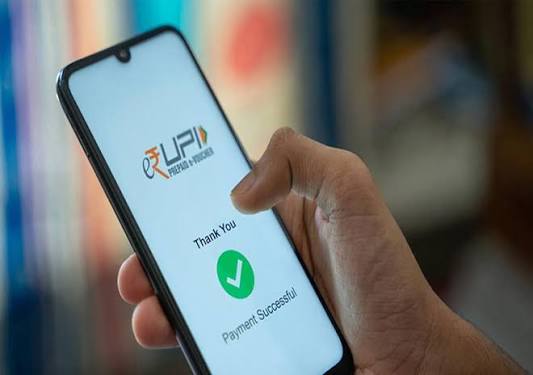
UPI in India: How Digital Payments Changed Everyday Life
Imagine going to a local tea shop, buying groceries, paying a restaurant bill or sending money to a friend — without carrying cash or searching for an ATM.
For millions of Indians, this has become normal because of UPI (Unified Payments Interface).
Launched by the National Payments Corporation of India (NPCI) in 2016, UPI has changed the way people send and receive money. It allows users to make instant bank-to-bank payments through mobile apps, QR codes and UPI IDs.
What Is UPI?
UPI is an instant digital payment system developed by NPCI, an RBI-regulated entity. It allows users to connect their bank accounts to supported UPI apps and transfer money instantly.
Instead of entering lengthy bank details for every transaction, users can generally make payments using a UPI ID, mobile number, QR code or other supported payment methods.
The UPI system was initially launched as a pilot on April 11, 2016, with the public rollout beginning in August 2016.
How UPI Changed Everyday Payments
Before UPI became popular, people commonly depended on cash, cards, bank transfers and ATMs for everyday transactions.
UPI made many small payments much easier.
Today, people can use it to:
- Pay at local shops
- Send money to family and friends
- Pay electricity and other bills
- Pay for food and shopping
- Make online purchases
- Pay school and college fees
- Make certain investment-related payments
- Transfer money between bank accounts
NPCI says UPI supports both person-to-person and merchant payments and is available around the clock.
QR Codes Made Payments Easier
One of the biggest reasons for UPI’s popularity is the QR code.
A small shop does not necessarily need a card machine to accept a digital payment. The merchant can display a QR code, and customers can scan it using a supported UPI app.
This has made digital payments accessible even for many small businesses and street-level merchants.
From vegetable vendors to restaurants and retail stores, QR-based payments have become a familiar part of everyday life.
UPI Reduced Dependence on Cash
UPI has also changed people’s relationship with cash.
A person may leave home with very little physical money and still be able to make multiple payments during the day.
This is particularly convenient for:
- Public transport and travel
- Restaurants
- Small purchases
- Online shopping
- Bill payments
- Sending money to relatives
The shift toward digital payments has also reduced the need to visit ATMs for many routine transactions.
UPI and Small Businesses
UPI has had a significant impact on small merchants.
Traditional card payment systems can require additional equipment and infrastructure. QR-based UPI payments provide a relatively simple way for merchants to accept digital payments.
For customers, the process can be equally simple: scan, enter the amount, authenticate the transaction and receive confirmation.
This has helped digital payments become part of everyday commerce across cities and smaller communities.
UPI Is More Than Just Sending Money
UPI has gradually developed beyond simple bank transfers.
The ecosystem now supports different payment experiences and use cases, including recurring payments, IPO applications and newer methods such as UPI Tap & Pay.
NPCI has also introduced conversational payment initiatives designed to make digital payments easier to access through regional languages and voice-based interactions.
Is UPI Safe?
UPI uses authentication mechanisms to authorize transactions. Users create a UPI PIN, which is required to authorize applicable bank transactions.
However, users still need to be careful.
Never Share Your UPI PIN
Your UPI PIN should remain private. A legitimate bank representative should not ask you to disclose it.
Check the Recipient
Before confirming a payment, verify the recipient’s name and amount.
Be Careful With QR Codes
Scanning a QR code can be used to make a payment. Users should not assume that scanning a QR code automatically means they will receive money.
Avoid Suspicious Links
Do not enter banking or UPI information on unknown websites or links received through messages.
UPI and the Digital Economy
The growth of UPI is part of India’s wider transition toward a digital economy.
Digital payments make it easier for consumers and businesses to complete transactions quickly, while electronic records can also make payment activity easier to track.
UPI’s design was intended to provide an interoperable payment system rather than forcing users and merchants to operate within a single bank or payment network.
How UPI Changed Life for Different People
For Students
Students can quickly split restaurant bills, pay fees where supported, recharge services and send money to family members.
For Working Professionals
Professionals can pay for meals, transport, shopping and household expenses without carrying much cash.
For Small Shopkeepers
Merchants can accept digital payments through QR codes without relying solely on cash.
For Families
Parents can transfer money to children instantly, while family members can send emergency funds without visiting a bank.
What Does the Future of UPI Look Like?
Digital payments in India are continuing to evolve.
New features are focusing on making payments faster, more accessible and easier to use. Voice-based payments, tap-and-pay experiences and other innovations could make digital transactions even more convenient in the future.
At the same time, digital safety will become increasingly important as more people use online payment systems.
Conclusion
UPI has transformed digital payments in India by making everyday money transfers fast, convenient and widely accessible.
From a small roadside shop to online shopping and bill payments, UPI has become part of daily life for millions of people. Its evolution also shows how technology can simplify financial services when systems are designed around convenience and interoperability.
As India’s digital economy continues to grow, UPI is likely to remain an important part of how people and businesses make payments.