
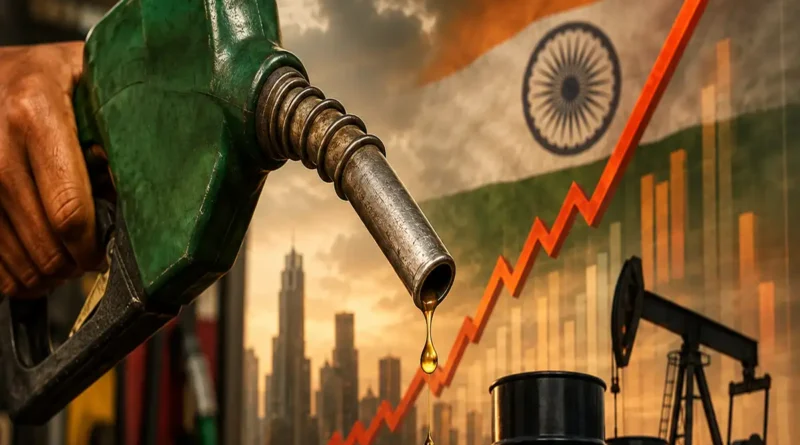
Petrol and Diesel Price Hike in India 2026: Reasons, Impact and What Consumers Should Expect
The recent increase in petrol and diesel prices across India has once again raised concerns among consumers, businesses, and transport operators. Rising fuel costs are expected to impact household budgets, transportation expenses, and overall inflation in the coming months.
Experts believe that global crude oil prices, geopolitical tensions in West Asia, and pressure on oil marketing companies are among the major reasons behind the latest fuel price hike.
Why Have Petrol and Diesel Prices Increased?
According to reports, fuel prices were increased after a long period of relative stability as state-run oil marketing companies faced growing financial pressure due to rising international crude oil prices.
Some key reasons include:
- Rising global crude oil prices
- Supply disruptions linked to West Asia tensions
- Increased import costs
- Losses faced by oil marketing companies
- Weakening currency impact on imports
Industry experts have stated that oil companies were facing significant losses due to the gap between global fuel prices and domestic retail rates.
Latest Fuel Prices in Major Cities
Fuel prices vary from city to city because of state taxes and local levies.
Current reports show that petrol prices in Delhi have crossed ₹102 per litre, while diesel prices are around ₹95 per litre. Other metro cities are also witnessing higher fuel rates.
Impact on Common Citizens
The fuel price hike is expected to affect daily life in several ways:
1. Higher Transportation Costs
Bus operators, cab services, and logistics companies may increase fares due to higher fuel expenses.
2. Increased Cost of Goods
Transportation plays a major role in supply chains. Higher diesel prices can increase the cost of food, groceries, and essential goods.
3. Inflation Concerns
Economists warn that rising fuel prices can contribute to overall inflation, affecting household budgets and business operations.
Impact on Businesses
Businesses that depend heavily on transportation and logistics are likely to face increased operational costs.
Industries such as:
- Manufacturing
- E-commerce
- Cold chain logistics
- Agriculture
- Delivery services
may experience higher expenses if fuel prices continue to rise.
Will Fuel Prices Increase Further?
Market experts believe that further fuel price revisions cannot be ruled out if global crude oil prices remain elevated. Reports suggest that oil companies are still under financial pressure despite recent hikes.
Much will depend on:
- International crude oil prices
- Geopolitical developments
- Government policies
- Currency exchange rates
Importance of Monitoring and Operational Efficiency
As fuel and operational costs increase, businesses are focusing more on efficiency, monitoring, and resource management. Real-time tracking systems help organizations reduce wastage, improve compliance, and optimize operations.
TechmedSmartSense, a trusted Data Logger Provider in Delhi, offers advanced temperature monitoring systems and real-time data logger solutions for healthcare facilities, laboratories, pharmaceutical storage, blood banks, and cold chain logistics.
With reliable monitoring and instant alert systems, TechmedSmartSense helps organizations improve operational efficiency and maintain critical environmental conditions even during periods of rising operational costs.
Conclusion
The latest petrol and diesel price hike is expected to have a widespread impact on consumers, businesses, and the overall economy. Rising transportation costs and inflation concerns may continue to affect daily life if fuel prices remain elevated.
As industries adapt to changing economic conditions, technology-driven monitoring and efficiency solutions will play an increasingly important role in managing costs and improving operational performance.